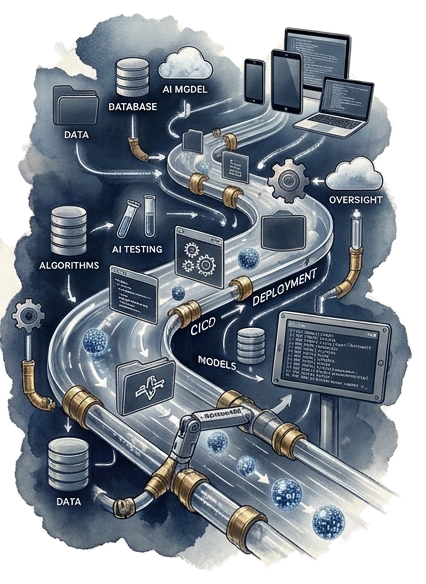
[human written] In the current environment of AI , circa late 2026, most frontier LLM models have gotten quite good at producing rather complex and complete working software products including cloning popular enterprise grade applications. What does this mean for the production of software development and how does it change it. Is the SaaSApocalypse really here.? Below I’ll discuss and highlight some of the issues that AI coding and particularly AI software generated by large clusters of AI agents and how it will lead to an explosion of new software, some closely mimicking existing products, while other software bring enhanced or more powerful versions. At the end the world will be rich with software and the costs particularly for end users should drop dramatically, at least in theory.
Cloning Big Name products from Adobe and Microsoft
The eye-opening example came in late September when a developer named Brandon Thomas of ArtCraft made waves by releasing open-source equivalents to major Adobe Creative Suite applications , quickly following up by targeting Microsoft 365. Projects like WordCraft (replacing Word), GridCraft (replacing Excel), and DeckCraft (replacing PowerPoint) have emerged, sporting layouts and core functionalities strikingly similar to their commercial counterparts. The legality of this is debatable, but since the source code to these proprietary products isn’t publicly available, these are essentially “clean room implementations”, but no doubt legal folks will have their day with this interpretation…
What this means is that software that once required large commercial houses and experienced teams to developers to create now can be conjured up in days or weeks . The moat of software development is essentially non existent.. It still requires some effort to setup the AI agents and configure them to properly re-create the existing product not to mention the cost of the tokens. The cost of tokens is the big variable here, as this cost may go up or go down.
How to Reverse Beginner Software (Clean Room)
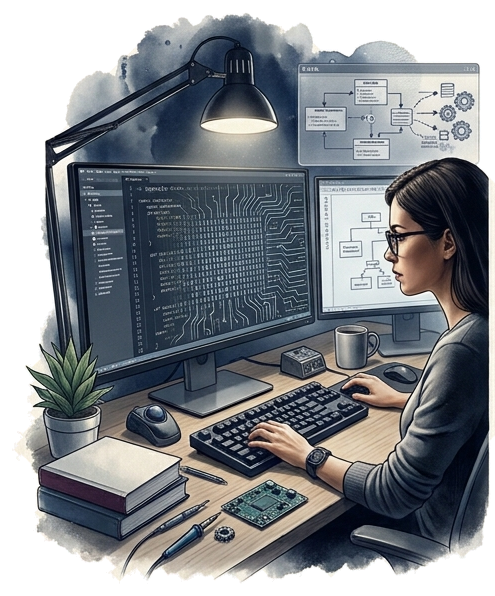
There are several approaches to reverse engineer software, without the original source code. The traditional way was to take the original software product or Api, and through lots of trial and error manually recreate the functions and conformity of the original software . A team of engineers (“dirty team”) analyzes the target software’s behavior. They study its user interface, inputs, outputs, network protocols, and error messages. They may use decompilers or disassemblers to look at compiled binary code. Crucially, they write down what the software does, creating a purely functional specification document. Then a legal team will go over the new functional specification document and vet that not obvious patents or other IP is infringed upon. Finally a completely separate team of programmers—who have never seen the original software or the decompiled code—takes the functional specification and writes entirely brand-new code from scratch to achieve the same result. Needless to say this a slow , labor intensive process, and seldom is done unless that value and legal ramifications of the effort are clear at the outset.
AI , and specifically agentic AI ( large groups of AI agents) AI agents take on the roles of both the analysis and implementation teams. One set of AI agents maps out UI behavior, file formats, and API endpoints from observation, while a secondary, isolated agent writes the new code base from those specifications.
Another way AI can work, is simply observing and working through the source software then recreating the functionality until a certain degree of parity is reached.
AI-assisted reverse engineering pushes copyright and contract law into uncharted territory. Furthermore, under current legal frameworks (such as rulings by the U.S. Copyright Office), purely AI-generated code or output lacks human authorship and cannot be copyrighted. This means that while an AI creator can rapidly clone a software suite, they may legally “own” very little of it—effectively stripping the software of traditional copyright protections and rendering it open to the public domain immediately. This is a still evolving area of legal discussion and time will tell how it will play out.
Software Explosion
So given the number of clones of popular software and ease of creating clones of existing software or creating new software for niche markets
What’s the MOAT now?
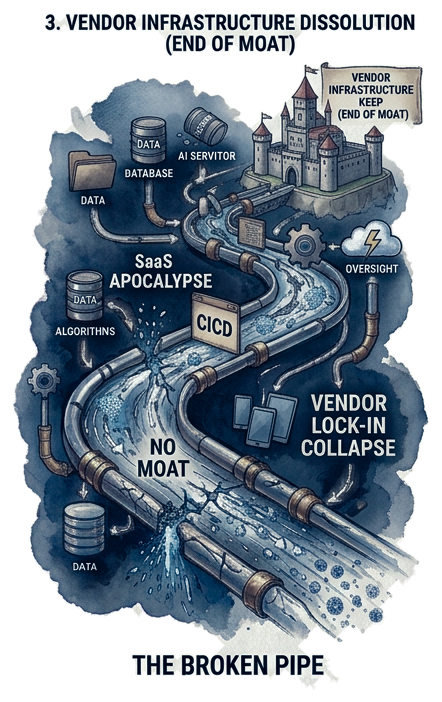
Now that the actual creation part of software is mostly created by the machine and the need for armies of developers is no longer needed, and if anyone can create or build their own software (presuming they can afford the costs of the tokens), does that mean software is now free? and if so what value if any do folks using AI to create software of other companies that relied on traditional software revenue model now have? In other words what is the software MOAT that available now that the actual creation of software is mostly automated?
This is a valid question with no easy answers. Some ways Software companies can survive and thrive in modern AI software world is via:
- Proprietary Data , API access and other exclusive digital content: Many companies collect or have exclusive access to valuable proprietary data (think near real-time financial data ) , or logistics data, or any other digital asset that isn’t public or easily sourced.
- Enterprise and vertical SaaS (healthcare, legal, finance) face strict legal requirements that raw open-source code or quick AI-generated clones cannot clear. Requirements like SOC2 Type II, HIPAA compliance, GDPR adherence, indemnity insurance, and enterprise-grade security vetting take years to build and vast capital to maintain.
- User base and network effect: While your software can be cloned , getting users to use the new software is not automatic, even if it’s free or very affordable, captive users or the network effect are real momentum elements that keep . Keep in mind AI usage and features aren’t limited to new clones, existing software products can be made better and even custom versions can be created all while using the same source provider.
Coming software explosion
What all this means, is we’re about to enter a golden age of software availability (aka software explosion) from simple “disposable” scripts that some users will need to solve a one time problems, to fairly sophisticated tools and products that rival or exceed commercial applications. This means things like platform exclusivity (only runs on PC) or compatibility may be a thing of the past, the number of quality niche applications will explode especially where the niche has many high value prospects (think financial products) .
The legal landscape is still open to debate an no doubt going to be an area of intense legal interest and scrutiny. But if recent settlements between RIAA, Guild of Authors and others with the frontier lab and tech companies are any indication, the legacy content and media providers know the AI genie is out of the bottle and its better to partner with AI than to try and fight it out of existence, especially when Chinese and open source models would likely not be easy targets for liigations.
The “SaaSApocalypse” may not mean the end of software, but it marks the definitive end of software as an exclusive, high-margin fortress built solely on code. As agentic AI and automated clean-room cloning democratize creation and flood the world with abundant, cheap alternatives, traditional code-based moats are crumbling. Yet, as the legal and tech landscapes inevitably shift toward accommodation rather than prohibition, software companies will find that survival doesn’t depend on who owns the lines of code. Instead, the enduring value will rest where machines cannot easily tread: in proprietary data, rigorous enterprise trust, entrenched network effects, and deep human context.